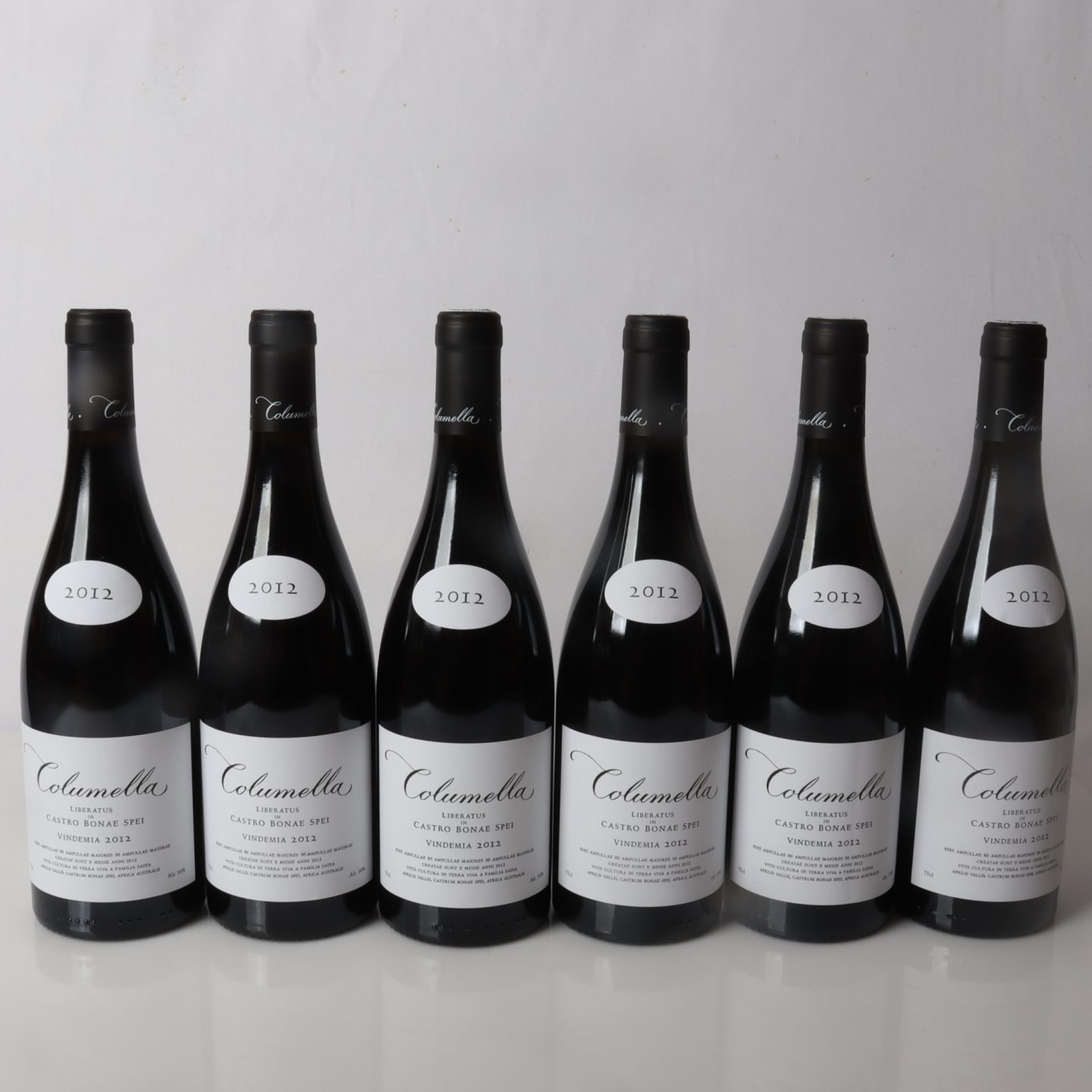
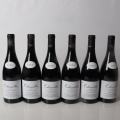
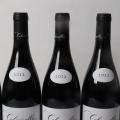
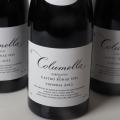
Sadie Family, Columella 2012, 96/100 Parker
900,00 €
Mindestaufruf
Dieses Lot war Teil unserer Auktion «Winterauktion 2026» am 14.02.2026.
09599
96/100 Parker
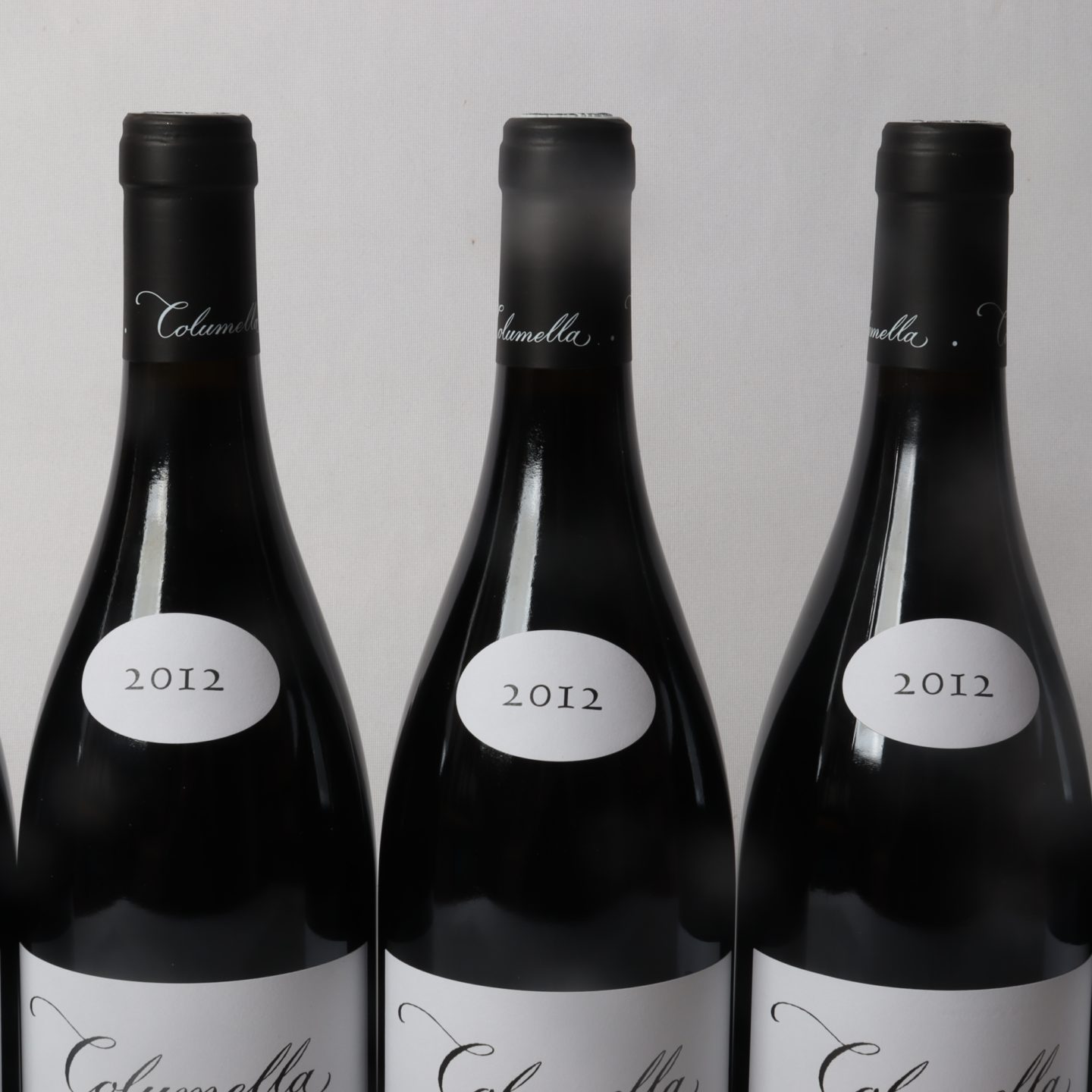
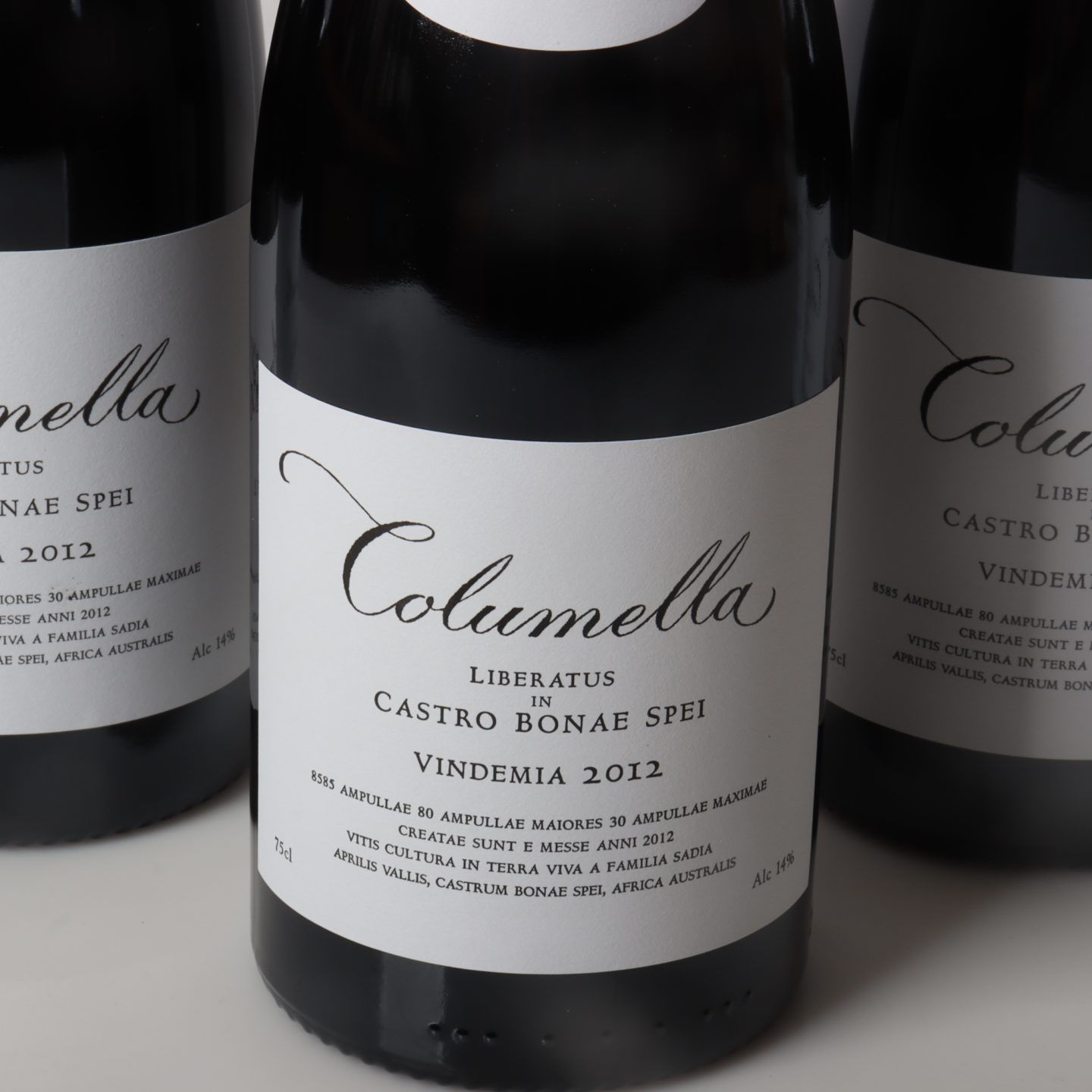
Sadie Family, Columella, 2012
6 x 0.750L
Constantia
perfect
perfect
into neck
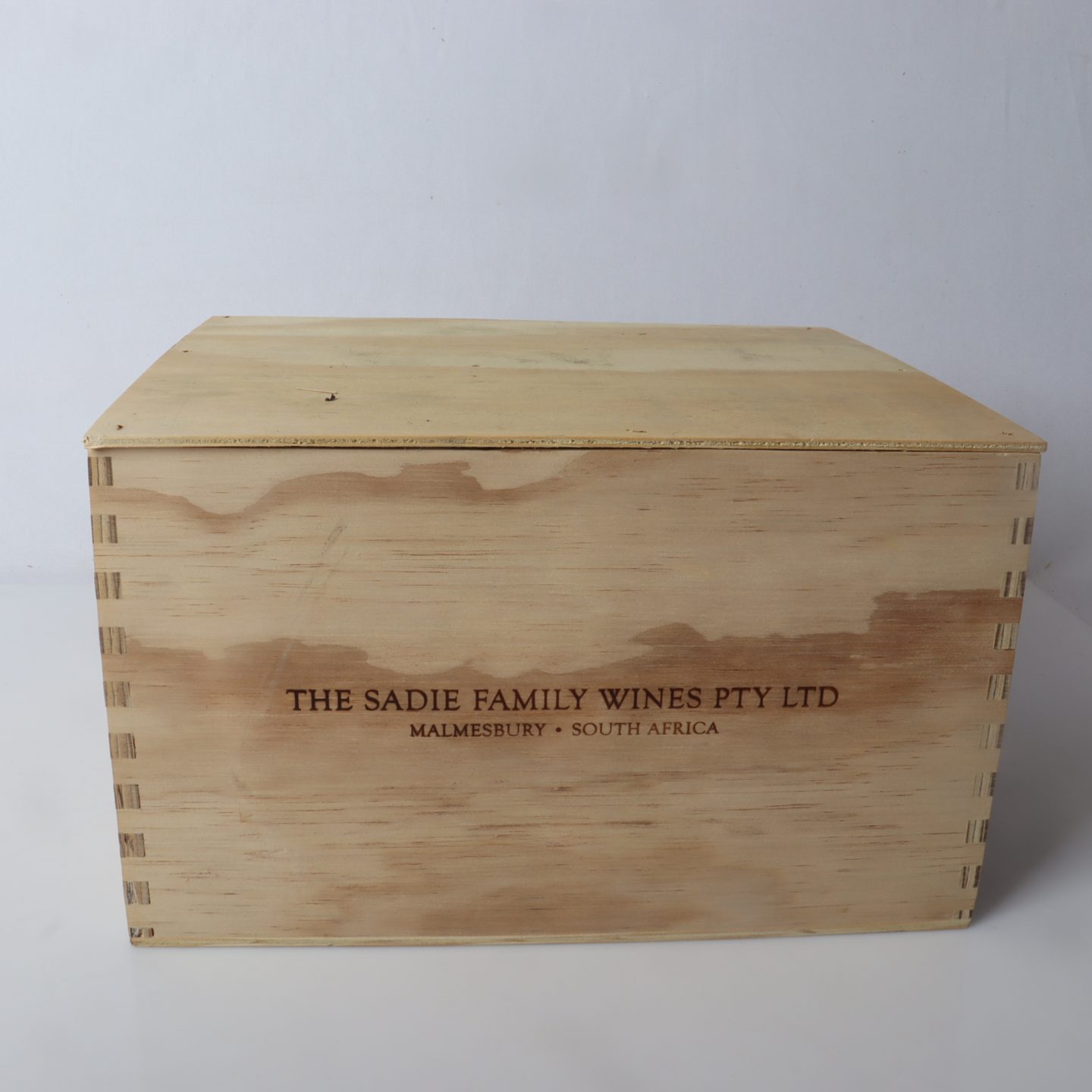
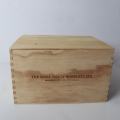
Original wooden case
96 / 100 Robert Parker
The 2012 Columella is a blend of 76% Syrah, 17% Mourvedre and 7% Grenache from the Swartland and Paardeberg area, hand-sorted and fermented in 2,000-liter open wooden fermenters and raised in barriques (10% new) for 12 months then one year in oval foudres. It has a very well-defined bouquet that repays time in the glass: wild strawberry and bilberry, cloves and white pepper, distant sea spray scents. The palate is medium-bodied with taut tannins, crisp acidity, superb backbone and real “authority” on the finish. One of those wines that will instantly change anyone who does not take South African wine seriously. Eben Sadie send me a note of apology when I informed him of my trip over to South Africa in July, since he would be away with his family. The guy probably deserves a break given all the effort he put into his wines. It was perhaps appropriate that I ended up tasting them in the living room of Rosa Kruger, the behind-the-scenes forager of old vines who has been instrumental in rescuing precious rootstock for the current generation of winemakers to exploit, including Eben himself. (Indeed, I sometimes think of Rosa as Swartland's own Alan Lomax, saving threatened ancient vines instead of threatened ancient folk songs.) As usual, Eben's wines are distinctive: very natural, sometimes quirky and always with a story to tell. As is often the case, there is one that sticks out as being truly exceptional and another that leaves me scratching my head. Eben is revered throughout South Africa, though one winemaker reminded me that his remarkable success has come without Eben owning any vines himself. So I asked Eben about this and found that it would be incorrect to presume that he relies on contracted fruit. "I do not work with contracted fruit. We lease the parcels and then we do most of the viticultural aspects. We even at this stage have a mobile farming unit, being trucks, tractors, implements and a team that goes from vineyard to vineyard. If we do not actively work with it, then we do not vinify it. It is quite an organization to attend to all the parcels. Some we do with the farmer’s given implements and equipment and if the hardware is not up to scratch then we move our entire rig. We work on payments per hectare for 90% of our fruit." "We own 17 hectares and have been preparing the soils for the past number of years. We actually would have planted our own property as well by now, but we await new material selections that we have been involved with for past ten years. We will be planting Mediterranean varieties from Sicilia, Southern Italian Mainland, Southern Spain, Southern Greek Medi as well as Portuguese. Mainly grapes in White and Red that retain acidity and freshness with bright fruit and resistance to sun and drought." "Planting what belongs is much more to the point as opposed to planting what sells. People plant Syrah because it is an easy sale, but I still believe there is an array of better grape varieties to be planted here. The entire New World being planted with only essentially seven different varieties does not translated cultures nor terroir." Eben reported a relatively benign growing season and those magic words "smooth sailing" appear in his vintage summary. "The 2013 harvest was quite different from the previous two vintages as it did not get taken down by such extreme heat waves as is often the case in February," he told me. "Then there was quite a massive downpour of rain about 70% through our harvesting and for many other producers even before they started really picking. All the fruit that came in after those big rainfalls did measure much less acidity but in essence the 2013 wines have much more primal fruit and elegant fruit flavors in the reds and they have great drinkability in terms of their youth but having tracked their aging over the past nine months since bottling their development is steadily slow and I do not think it is a diluted effort. Purely not the tannin load of the previous year. In my mind the 2013 Whites are almost every account better than the 2012 wines. Almost all of the whites were picked before the rains in the midst of harvest and this aligned with the absence of heat waves just made for amazing textures and fruit and minerality on the wines." Finally, I asked Eben to pick his own favorites among his captivating Old Vine Series 2013s. "Standouts (Whites – Skurfberg and Voetpad) (Reds – Pofadder & Treinspoor) It is not often that one gets the Tinta Barocca in such a condition as it was in 2013 for the Treinspoor. It is a grape that is extremely sensitive to sunburn and although we sort every berry, in 2013 the Treinspoor with the cooler weather and bit of rain and then late ripening just seemed to be a perfect fit to this parcel."
eRobertParker.com #215 Oct 2014
The 2012 Columella is a blend of 76% Syrah, 17% Mourvedre and 7% Grenache from the Swartland and Paardeberg area, hand-sorted and fermented in 2,000-liter open wooden fermenters and raised in barriques (10% new) for 12 months then one year in oval foudres. It has a very well-defined bouquet that repays time in the glass: wild strawberry and bilberry, cloves and white pepper, distant sea spray scents. The palate is medium-bodied with taut tannins, crisp acidity, superb backbone and real “authority” on the finish. One of those wines that will instantly change anyone who does not take South African wine seriously. Eben Sadie send me a note of apology when I informed him of my trip over to South Africa in July, since he would be away with his family. The guy probably deserves a break given all the effort he put into his wines. It was perhaps appropriate that I ended up tasting them in the living room of Rosa Kruger, the behind-the-scenes forager of old vines who has been instrumental in rescuing precious rootstock for the current generation of winemakers to exploit, including Eben himself. (Indeed, I sometimes think of Rosa as Swartland's own Alan Lomax, saving threatened ancient vines instead of threatened ancient folk songs.) As usual, Eben's wines are distinctive: very natural, sometimes quirky and always with a story to tell. As is often the case, there is one that sticks out as being truly exceptional and another that leaves me scratching my head. Eben is revered throughout South Africa, though one winemaker reminded me that his remarkable success has come without Eben owning any vines himself. So I asked Eben about this and found that it would be incorrect to presume that he relies on contracted fruit. "I do not work with contracted fruit. We lease the parcels and then we do most of the viticultural aspects. We even at this stage have a mobile farming unit, being trucks, tractors, implements and a team that goes from vineyard to vineyard. If we do not actively work with it, then we do not vinify it. It is quite an organization to attend to all the parcels. Some we do with the farmer’s given implements and equipment and if the hardware is not up to scratch then we move our entire rig. We work on payments per hectare for 90% of our fruit." "We own 17 hectares and have been preparing the soils for the past number of years. We actually would have planted our own property as well by now, but we await new material selections that we have been involved with for past ten years. We will be planting Mediterranean varieties from Sicilia, Southern Italian Mainland, Southern Spain, Southern Greek Medi as well as Portuguese. Mainly grapes in White and Red that retain acidity and freshness with bright fruit and resistance to sun and drought." "Planting what belongs is much more to the point as opposed to planting what sells. People plant Syrah because it is an easy sale, but I still believe there is an array of better grape varieties to be planted here. The entire New World being planted with only essentially seven different varieties does not translated cultures nor terroir." Eben reported a relatively benign growing season and those magic words "smooth sailing" appear in his vintage summary. "The 2013 harvest was quite different from the previous two vintages as it did not get taken down by such extreme heat waves as is often the case in February," he told me. "Then there was quite a massive downpour of rain about 70% through our harvesting and for many other producers even before they started really picking. All the fruit that came in after those big rainfalls did measure much less acidity but in essence the 2013 wines have much more primal fruit and elegant fruit flavors in the reds and they have great drinkability in terms of their youth but having tracked their aging over the past nine months since bottling their development is steadily slow and I do not think it is a diluted effort. Purely not the tannin load of the previous year. In my mind the 2013 Whites are almost every account better than the 2012 wines. Almost all of the whites were picked before the rains in the midst of harvest and this aligned with the absence of heat waves just made for amazing textures and fruit and minerality on the wines." Finally, I asked Eben to pick his own favorites among his captivating Old Vine Series 2013s. "Standouts (Whites – Skurfberg and Voetpad) (Reds – Pofadder & Treinspoor) It is not often that one gets the Tinta Barocca in such a condition as it was in 2013 for the Treinspoor. It is a grape that is extremely sensitive to sunburn and although we sort every berry, in 2013 the Treinspoor with the cooler weather and bit of rain and then late ripening just seemed to be a perfect fit to this parcel."
eRobertParker.com #215 Oct 2014
94 / 100 Wine Spectator
This is well-built, with a bolt of graphite holding fairly weighty blackberry, plum and black currant paste flavors together. Lots of singed juniper and charcoal accents rumble in the background, while a nice brambly feel pervades the finish. Displays range and energy, but needs cellaring to meld fully. Syrah and Mourvèdre. Best from 2017 through 2025. 750 cases made.
http://www.winespectator.com/wine/detail/source/search/not..
This is well-built, with a bolt of graphite holding fairly weighty blackberry, plum and black currant paste flavors together. Lots of singed juniper and charcoal accents rumble in the background, while a nice brambly feel pervades the finish. Displays range and energy, but needs cellaring to meld fully. Syrah and Mourvèdre. Best from 2017 through 2025. 750 cases made.
http://www.winespectator.com/wine/detail/source/search/not..
18 / 20 Jancis Robinson
2 months in small oak and then 12 months in foudres. ‘Don’t worry about tasting reds before whites, our whites always destroy the reds. White vines much older than reds.’ RS about 2.8 g/l. Much less intense colour than the 2005. Mid crimson. Lively freshness on the nose. Real tension and great juiciness. Something much more mineral than the 2005. Really appetising. Sinews and very long and juicy. Beauty and personality.
http://www.jancisrobinson.com/tastings/search?keywords=Sad..
2 months in small oak and then 12 months in foudres. ‘Don’t worry about tasting reds before whites, our whites always destroy the reds. White vines much older than reds.’ RS about 2.8 g/l. Much less intense colour than the 2005. Mid crimson. Lively freshness on the nose. Real tension and great juiciness. Something much more mineral than the 2005. Really appetising. Sinews and very long and juicy. Beauty and personality.
http://www.jancisrobinson.com/tastings/search?keywords=Sad..
Alle Zeitangaben basieren auf der Zeitzone Europe/Berlin.